
Ready to get the most out of your heating and cooling?
Pick a time, and we’ll swing by with tools, smiles, and yay-worthy service.
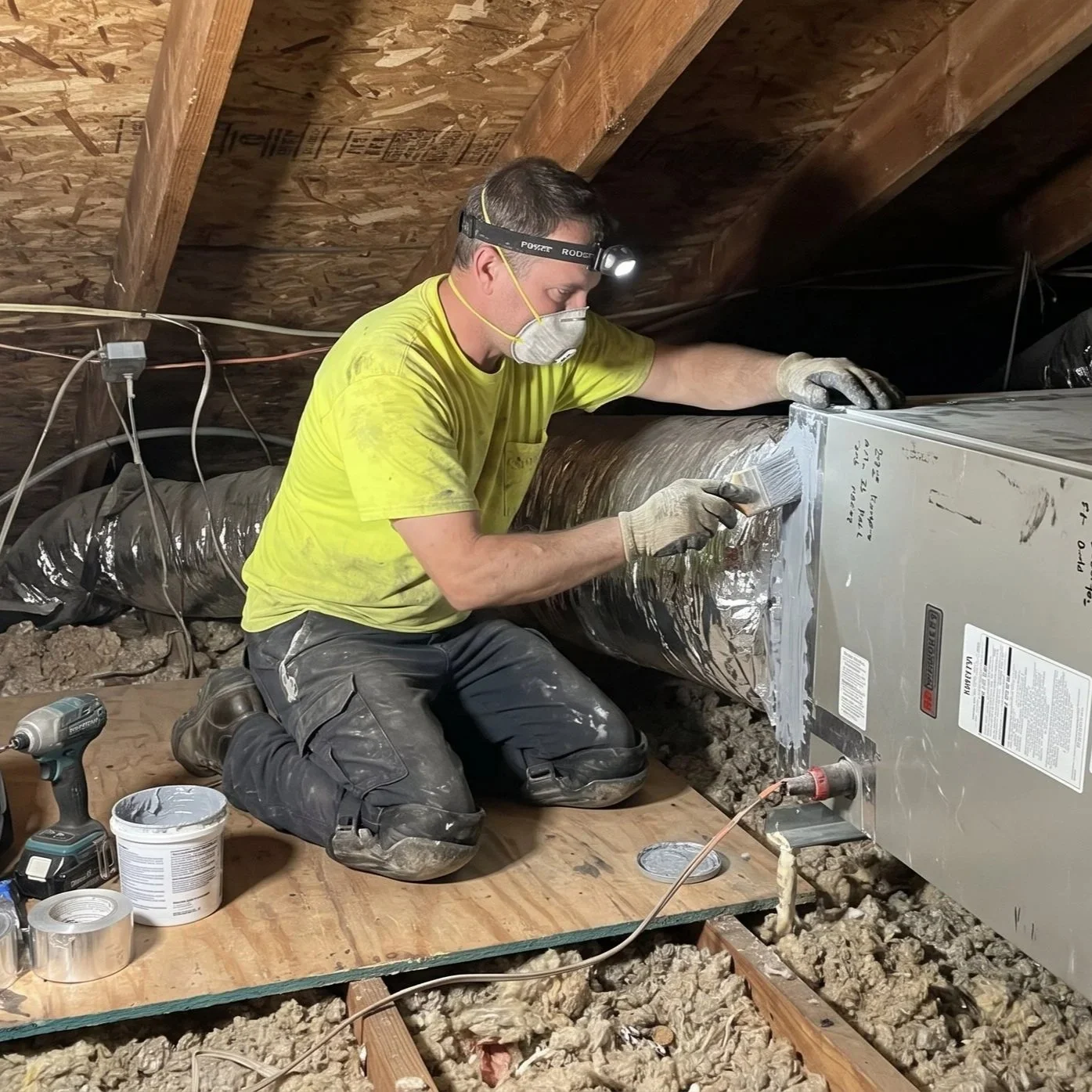
Key Benefits
Lower Monthly Energy Bills (15%–30% Savings):
Leaky connections force heated or cooled air into unconditioned spaces like attics, basements, or crawlspaces. Sealing the air handler and plenum ensures all conditioned air reaches living areas, allowing the system to run shorter cycles and consume less power.
Improved Indoor Air Quality:
The return side of an air handler creates negative pressure. Unsealed joints in a dusty basement or attic act like a vacuum, pulling in fiber insulation particles, mold spores, dust, pollen, and outdoor contaminants. Sealing prevents these pollutants from being drawn in and distributed throughout the home.
Better Airflow & Temperature Consistency:
Air lost at the air handler reduces static pressure inside the supply ducts. Sealing restores total pressure so that hard-to-reach rooms or second-story vents receive full airflow, resolving hot and cold spots.
Extended HVAC System Lifespan:
When air escapes or unconditioned air enters, the blower motor and compressor must work longer and harder to satisfy the thermostat. Reducing this mechanical strain decreases component wear, cuts down on repairs, and prolongs equipment life.
Protection Against Moisture & Mold:
Warm, humid air pulled through leaks in cooling season can condense on the air handler's internal components and evaporator coil. Sealing prevents moisture intrusion, reducing the risk of microbial growth inside the cabinet or duct lining.
Prevention of Backdrafting Safety Risks:
Unsealed return ductwork near combustion appliances (like gas water heaters or furnaces) can pull toxic exhaust gases, such as carbon monoxide, back into the home rather than venting them outside.